
You must have seen the Palm Pre getting charged wirelessly and wonder, will this be possible on the iPhone ever? Well, the answer is YES!
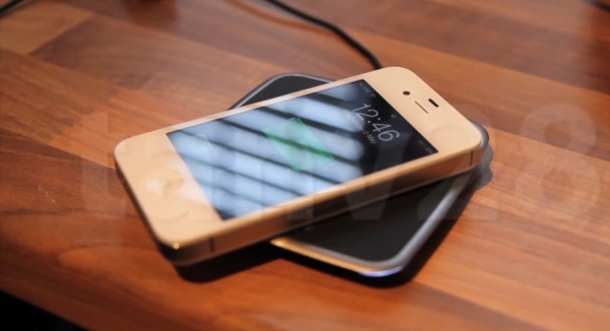
A hardware modification to your iPhone 4S can charge it over the air. A Team at MITÂ first demonstrated wireless charging in 2007, there were also a few devices which were based on that technology, but it didn’t gain popularity, until recently, someone brough tthe tweak to the iPhone.
A team from MIT’s Department of Physics, Department of Electrical Engineering and Computer Science and Institute for Soldier Nanotechnologies (ISN) have enabled a way to power cell phones, robots, mp3 players, laptops and other portable devices without attaching a cable to it to charge it.
Tanveer Islam, from Essex, England, a doctor by profession was inspired by the team and come up with a creative hack. Perviously, it was Applied to Nokia Lumia 800 and now it has been carried on to the iPhone 4S. He uploaded a video on YouTube and explained how to go ahead and modify your iPhone that will gain to power itself without being charged the traditional way.
Before you begin, the mod requires a prebuilt wireless charger such as the Powermat, basic soldering skills, a spare charger port assembly, a thin wire gauge, and an iPhone 4S.
The process involves soldering wires from the charging port to specific pins on the spare charger port assembly. The wires are then connected to the USB points on the wireless receiver. The wireless charging circuit apparently adds an extra millimeter of thickness to your iPhone (according to the video). After that, you’ll have to remove a metal plate from the back glass of the 4S original cover. Remember, just like Nokia Lumia 800, this will also void your warranty.
As soon as you reattach the cover of your iPhone, you’re all set. Now, you can charge your iPhone 4S without being connected with any charger or wire. See the tutorial video below.
P.S. Try it at your own Risk
via: CNET UK